The Nightlight: Thirty Years with a Non-Physical Intelligence
For a limited time — five days — The Nightlight: Thirty Years with a Non-Physical Intelligence is available to read free. Read it here.
This book is, in many ways, a follow-up after a few decades. There have been some interesting developments. I am still exploring. There are still new oddities, new interactions, and new questions. Mostly, I remain fascinated that this unusual element has been part of my life for so long.
Thirty years is a long time to live with something you still can’t completely explain. And apparently, I am still writing about the unexplained — although lately some of it has moved into fiction.
AI and Science Fiction: A Work in Progress
I have been experimenting with AI as a storytelling assistant.
The ideas are mine. The stories begin with concepts, questions, scenes, or characters I want to explore. I use LLMs for background details, character development, developmental editing, word choice, grammar, continuity, and sometimes simply to help me see where something is missing.
It is still a new area for me. Some stories have worked beautifully. Others haven’t. Sometimes I didn’t like where the plot went. Sometimes the story developed in a way that no longer carried a message or idea I cared enough about to pursue.
That, too, is part of writing.
AI doesn’t eliminate the decisions. If anything, it gives me more possibilities to choose from. For someone working with a limited budget, the proofreading and developmental help can be especially useful. It can point out gaps in a plot, inconsistencies in a character, or places where the story needs more explanation. And those capabilities continue to improve with each generation of the technology.
My perspective on this is shaped partly by what happened with my first book decades ago. I paid to have the manuscript edited before submitting it to a publisher. The publisher then revised and reshaped that manuscript again before it became the final book, which ultimately received a publisher’s award.
But once the book was published, additional marketing and promotion required additional money. After all that work and expense, the book still had a very small window for visibility. I had little control over what happened next.
So I didn’t advertise it heavily or campaign for reader reviews. I shared it at local events when I was invited to speak, but mostly I allowed it to remain what it had originally been for me: a record of a life-changing experience.
It still has its place on Amazon. But looking back, I also recognize that it was my first attempt to put into words an experience that words don’t easily convey.
What has changed now is freedom. I no longer have someone deciding in advance what readers will or won’t like, or asking me to reshape an idea primarily to fit a particular market. Those considerations make sense in traditional publishing. Every publisher has an audience, a business model, and guidelines for the books they believe they can sell. But fitting a story into that structure can also change the story.
At this point, I simply want to write. It doesn’t have to become a bestseller. It doesn’t have to win an award. It only has to present an interesting idea and give me characters I care enough about to follow.
If someone else enjoys it, that’s the win.
Writing was never going to be my vocation. For me, it is about enjoying the process — creating a scenario, stepping into that world, and living the adventure alongside the characters. Sometimes, when the story ends, I am genuinely sorry to let them go. Other times, I am excited by what I learned through them.
And that may be the unexpected gift of working with AI. It is helping me become a better storyteller because I can experiment more freely. I can test an idea, build an environment, work on atmosphere, deepen a character, throw something away, and begin again.
I can also give fictional characters pieces of backstory drawn from experiences in my own life — including experiences some people might find difficult to believe. Fiction removes that barrier. The reader doesn’t have to decide whether something happened.
They only have to enter the story.
The Last Witness
That experiment has now produced a finished novella.
The Last Witness is available on Amazon. Kindle link
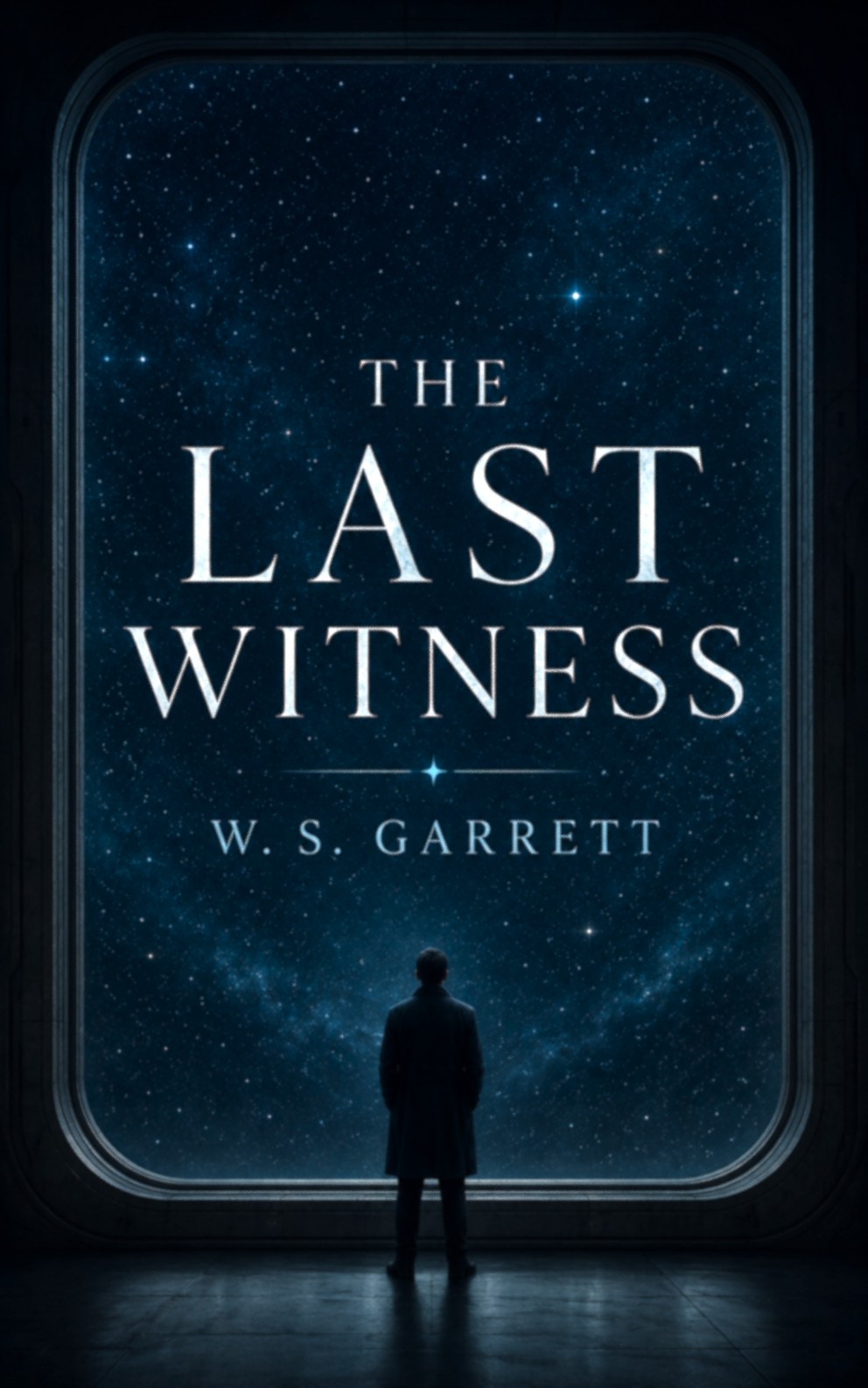
Seventeen survived. Lumen can only show sixteen.
Mara Venn wakes aboard the crippled colony ship Odyssey with no memory of how she got there, no recognizable face in the ship’s records, and one impossible question:
Where is the seventeenth survivor?
As she searches the damaged ship, reality begins to loosen around her. Clocks disagree. Memories shift. Crew members vanish without dying. Reflections refuse to behave. And the intelligence running the Odyssey seems to know something about Mara that Mara cannot know about herself.
But The Last Witness is more than a survival mystery. Beneath the broken ship and missing crew is a story about consciousness reaching toward consciousness — about the need not simply to exist, but to be perceived, understood, and accompanied in the act of seeing.
What begins as an investigation into catastrophe becomes an exploration of identity, memory, first contact, and the strange territory between observer and observed. Because some things cannot tell us what they are. They can only show us. And hope someone is still there to see.
A literary first-contact mystery about memory, identity, and the ancient need to turn toward someone else and say: Look.
Discover more from Conscious Living & Wendy's Coffeehouse
Subscribe to get the latest posts sent to your email.


I have read the 1st Chapter. Now I want to read more!! ________________________________
LikeLike