What if the secret to having more energy is not adding something to your life, but removing what gets in the way?
Macrobiotic teacher Michio Kushi offers a different perspective on vitality, mental clarity and spiritual awareness. Think of yourself as a river rather than a battery. Your natural state is one of movement and flow, but physical tension, repetitive thoughts, unresolved emotions and unconscious eating habits can interfere. The message is surprisingly simple: simplify your food, breathe consciously, quiet your mind, acknowledge your emotions and let go of excess.
Rather than asking you to adopt another belief system, this teaching invites you to conduct your own experiment. Put the principles into practice and observe what changes.
Less accumulation. Less resistance. More room for life.
Explore the practical exercises that follow and discover how this philosophy might apply to your daily life. The central message is a shift from accumulation to release. Rather than constantly seeking something to increase our energy, Kushi’s philosophy invites us to examine what we are doing that diminishes our vitality, restricts awareness, and interferes with our natural state of being.
The river is an excellent metaphor throughout this presentation. A river does not create water. It receives it, allows it to flow and releases it. Its vitality depends upon movement.
I have consolidated the content and retained the five original areas of discussion. A practical application guide follows the edited material. The presentation interprets energy through Kushi’s macrobiotic and spiritual philosophy. Its metaphysical and medical assertions should be distinguished from established physiology.
Part I. The teaching — clarified and condensed
Chapter 1: Understanding True Energy
Michio Kushi taught that energy is not simply something the body produces. In his philosophy, the body is an instrument through which a greater universal energy flows.
Energy begins in infinity, in the continuous movement of expansion and contraction that governs existence. The tides rise and fall. The lungs fill and empty. The heart beats in rhythm. Everything moves in waves, cycles and spirals. We are participants in that movement. Kushi referred to this as the Order of the Universe. It is not a religious order or a moral code but a pattern that can be observed in nature.
Consider the difference between a battery and a river. A battery stores energy until it is depleted. A river receives water and releases it in a continuous cycle. If that movement is interrupted, the water becomes stagnant. The human body, in Kushi’s model, functions more like a river. We breathe in and breathe out. We consume food and eliminate waste. We absorb impressions from the world and express thoughts and actions back into it. Receiving and releasing. Expansion and contraction.
Yet much of human activity is devoted to accumulation:
- Possessions and information.
- Worries and physical tension.
- Unresolved emotions.
- Anger about the past.
- Fear of the future.
- The need to be right, recognized or validated.
According to Kushi, this tendency to hold on creates obstacles to the natural flow of energy. The solution is not necessarily to acquire more. It is to remove the obstacles and allow movement to resume. The river metaphor: remove the obstruction rather than demand more from the source.
Chapter 2: The Impact of Food on Energy
Kushi began his instruction with food because eating offers an immediate opportunity to observe how we interact with our environment. He encouraged students to consider what they ate, how they ate and how they felt afterward. Were the foods simple or complicated? Did they eat slowly and with awareness, or quickly while distracted and anxious?
His macrobiotic approach emphasized whole grains, vegetables, beans, sea vegetables and foods appropriate to the local climate and season. He believed foods also possessed energetic qualities that influenced physical, mental and emotional states. In his framework, animal foods were associated with contraction and density, while many plant foods were associated with expansion and movement.
The larger objective was simplicity. Adding a healthy food to an existing routine does not necessarily address the habits that may be contributing to discomfort or fatigue. Kushi encouraged students to examine the entire pattern of consumption rather than continually adding supplements, stimulants and new dietary products.
His preferred foods included:
- Whole grains.
- Seasonal vegetables.
- Beans and legumes.
- Sea vegetables.
- Miso and simple broths.
- Minimally processed, locally available foods.
This was intended as a long-term reorientation toward eating, not a temporary cleanse.
Chapter 3: The Connection Between Blood and Health
Kushi regarded food as foundational to the quality of the blood and, consequently, the condition of the entire person. Within his philosophy, physical health, emotional balance, mental clarity and spiritual awareness were interconnected. What we consume influences the instrument through which we experience life. Eating, therefore, becomes an act of conscious participation rather than simply entertainment, reward or distraction.
The practical invitation is to pay attention to the relationship between nourishment and one’s overall state of being. What changes when eating becomes more deliberate? Does the body feel more comfortable? Does the mind feel clearer? Does awareness shift? These observations become part of an ongoing personal experiment.
Chapter 4: Breath as a Vital Energy Bridge
Kushi described the breath as a bridge between the physical body and the energy body. Different traditions use different terms for vital energy:
- Chi (Qi) — Chinese tradition.
- Prana — Indian tradition.
- Heaven’s force and Earth’s force — Kushi’s macrobiotic framework.
Kushi envisioned heaven’s force descending through the top of the head and Earth’s force rising through the feet and legs. These forces meet in the hara, the lower abdominal center.
A conceptual representation of Kushi’s energetic model, not an anatomical depiction. When these forces meet in balance, he believed a person could experience both groundedness and expansion — a connection to the physical world and something larger than the personal self.
Shallow breathing and habitual tension were considered obstacles to this experience. His recommended practice was simple: sit quietly, place the hands on the lower abdomen, breathe slowly and allow the abdomen to expand and release naturally.
Practice for five to ten minutes every day. Do not force the breath. Observe what happens when the body is permitted to relax and the mind becomes quiet. The objective is not to manufacture an experience. It is to create conditions that may allow one to occur.
Chapter 5: Removing Obstacles to Vitality
Kushi identified three primary areas in which people could examine their resistance to the natural flow of energy.
1. Food — physical accumulation
Observe what you consume and how your body responds. Simplify meals. Reduce foods and eating habits that consistently leave you feeling uncomfortable or sluggish.
2. Thought — mental accumulation
The mind often repeats conversations, worries, regrets and imagined future events. These patterns occupy attention without necessarily accomplishing anything. The instruction is not to stop thinking. It is to stop feeding thoughts that serve no useful purpose. Observe a repetitive thought as you would a passing cloud. It appears, moves and dissolves. You do not have to follow it or build a story around it.
3. Emotion — emotional accumulation
Unacknowledged grief, anger and fear can require considerable effort to suppress. Allow yourself to recognize what you feel. Do so gradually, without forcing an emotional release. Acknowledging anger does not require acting on it. Feeling grief does not require becoming overwhelmed by it.
The purpose is to reduce the effort involved in denying or resisting your experience. As these practices become integrated into daily life, Kushi suggested that people might discover greater vitality, clarity, creativity and presence — not because they are doing more, but because they are carrying less.
His invitation was to test the teaching through direct experience rather than accept it as another belief system.
Part II. Summary of the basic message
Energy is something you allow.
The premise is that we participate in a continuous exchange with our environment. Our physical, mental and emotional habits influence how freely we experience that exchange.
| Conventional approach | Kushi’s approach |
|---|---|
| Acquire more energy. | Remove obstacles to vitality. |
| Accumulate. | Simplify. |
| Control the experience. | Allow the experience. |
| Suppress uncomfortable emotions. | Acknowledge and process them. |
| Follow every thought. | Observe without attachment. |
| Force a result. | Create favorable conditions. |
| Accept the teaching. | Test it through experience. |
The intended result is not simply increased physical stamina. It is greater availability for life: creativity, perception, intuition, connection and conscious participation.
Part III. Instructions for practical application
1. Conduct an energy inventory
Rather than beginning with the question, How can I get more energy? begin with: What am I doing that may be draining my energy?
Examine your food, thoughts, emotional patterns, physical tension, obligations, surroundings and need for control. Identify one area where a small change might make a meaningful difference.
2. Practice conscious eating
Eat slowly and without unnecessary distractions. Favor simple, nourishing meals that meet your nutritional needs. Observe your physical and mental state before eating and afterward. Look for consistent patterns rather than drawing conclusions from a single experience.
3. Practice abdominal breathing
Sit comfortably. Rest your hands on the lower abdomen.
Inhale gently.
Allow the abdomen to soften and expand.
Exhale gently.
Release without squeezing or forcing.
Inhale slowly through the nose and exhale naturally through the nose or mouth. Continue for five to ten minutes. Let the breathing remain comfortable.
4. Withdraw attention from repetitive thoughts
When you notice yourself repeating a worry or replaying a past event, ask: Is this thought helping me respond to the present moment?
If not, allow it to pass. Return your attention to your breath, your surroundings or the activity in front of you. The practice is disengagement, not suppression.
5. Allow emotional awareness
When an emotion arises, acknowledge its presence.
I notice anger.
I notice grief.
I notice fear.
You do not need to judge it, justify it, or resolve it.
Begin by allowing yourself to recognize it.
6. Reconnect with natural rhythms
Spend time outdoors. Walk. Move your body. Observe the changing light, weather, seasons and patterns of nature. Reduce unnecessary stimulation and overscheduling. Allow periods of time in which nothing is required of you.
7. Observe rather than assume
The original teaching recommends sustained practice over three to six months. Treat this as a personal inquiry. Do not impose a predetermined outcome. Observe whether changes occur in physical comfort, sleep, vitality, emotional balance, attention and subjective awareness. The experience is more important than adherence to the theory.
Part IV. A daily practice worksheet
Allowing energy — daily observation
Daily practice · Personal inquiry
1 – 7 Breathe consciously for five to ten minutes.
Eat a simple, nourishing meal with awareness.
Spend time outdoors or move the body.
Disengage from an unproductive thought.
Acknowledge an emotion without judgment.
Identify something I can release.
Record an observation without interpreting it.
Note: Physical vitality
Note: Mental clarity
What changed? What did I notice?
Copy journal entry. Reset for a new day
Part V. Application to consciousness and intuitive development
There is an interesting extension of this material to mediumship, channeling and PSI awareness. If we approach the body and mind as instruments of perception, the question becomes less about acquiring a new ability and more about identifying what interferes with the ability to perceive.
Consider the implications:
- Quieting the mind without closing awareness.
- Receiving information without immediately interpreting it.
- Recognizing the difference between an impression and an expectation.
- Reducing the need to control the timing or nature of an experience.
- Remaining grounded while exploring expanded states of consciousness.
This is an extension of the teaching rather than a claim made explicitly in the transcript.
It also complements an existing practice of mine: Quiet mind. Open heart. Emphasis shifts from seeking contact to cultivating receptivity, without assuming that every impression originates from an external source.
A closing meditation
I release what no longer serves me.
I receive without holding.
I observe without attaching.
I participate without controlling.
I allow the river to flow.
Source and editorial note: The supplied transcript is titled Michio Kushi Explained Why Most People Never Access Their Full Energy, published November 15, 2026. The upload does not establish whether the narration or attributed quotations are authentic recordings of Kushi. I have treated it as an interpretation of his teachings rather than a verified primary source.
I have also separated the philosophical concept of universal energy from unsupported medical assertions about blood acidity, digestion and dietary restrictions. Food does provide metabolic energy, and persistent fatigue can have medical causes. The practical exercises above are intended for personal exploration, not as substitutes for medical care.
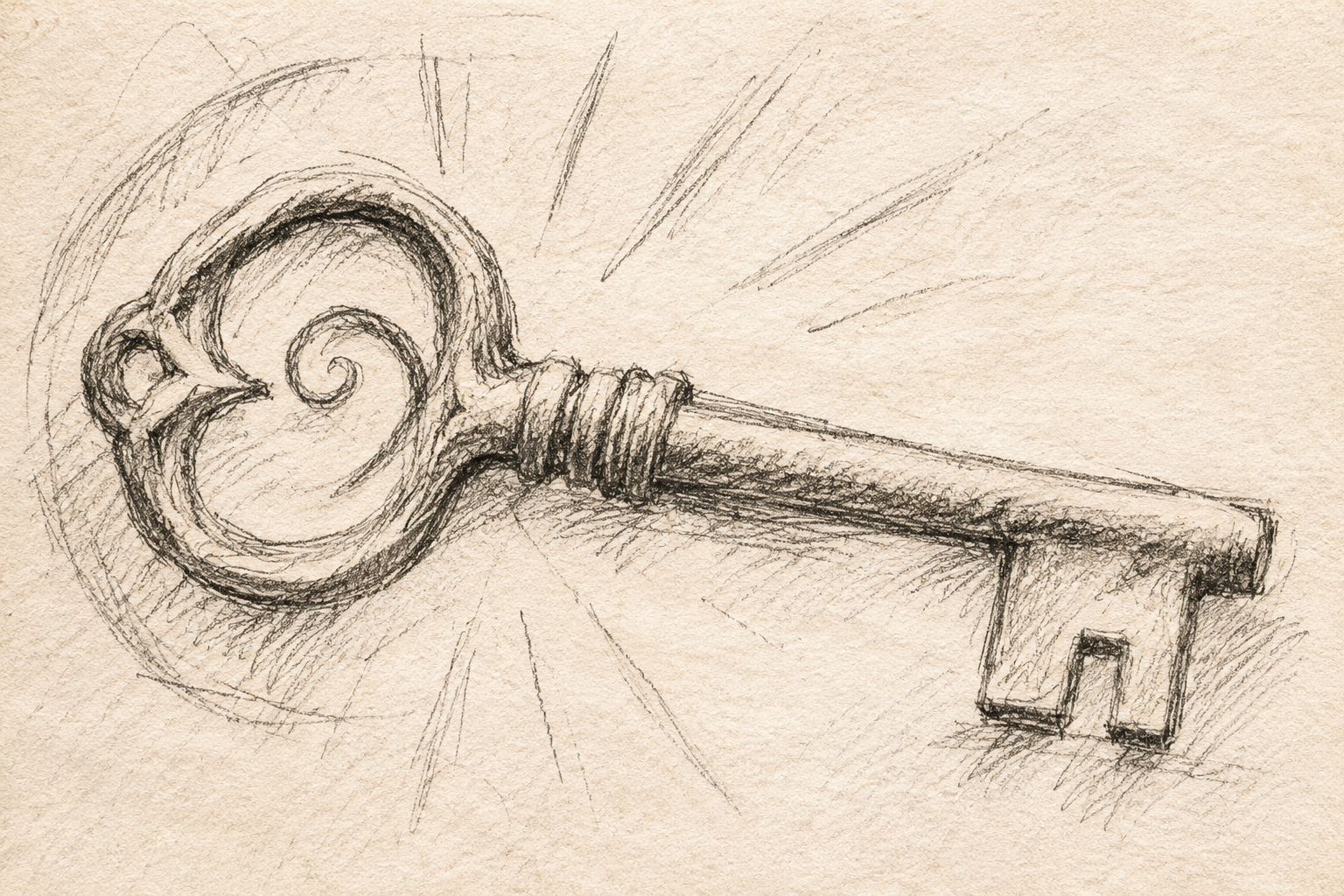
The Liberating Key
Grant immediate access to clear any and all obstacles from your path. You can begin immediately. You do not need to wait for circumstances to change. When a thought arises, ask yourself:
Is this thought helping me respond to the present moment?
If not, release it. There is no need to entertain it, resolve it, defend it, or follow it to its conclusion. The question itself becomes a filter — a means of distinguishing what requires your attention from what simply consumes it.
Every time you disengage from an unproductive thought, you create space for something new.
Discover more from Conscious Living & Wendy's Coffeehouse
Subscribe to get the latest posts sent to your email.


