I stood alone in the kitchen, daylight streaming through the windows, watching the nightlight blink and flicker. What I was seeing should not have been possible. The nightlight was interacting with me — and it changed everything.
Consciousness, silence, and the experiences that change us
When something happens that has no explanation and no fixed description in your understanding of the world, you still have to go to work the next morning. Feed the dog. Check email. Start the laundry. Answer the phone. Yet something has changed, and the people around you have no idea.
Maybe you saw something they could not see. Or you might have experienced awareness beyond your body, sensed a presence, received information you could not account for, or found yourself remembering an event you were never able to understand.
The challenge? Stay silent or tell someone. If you do tell, how much can you say before the listener becomes uncomfortable? And what happens when the experience continues to affect your life long after everyone else expects you to move on?
These are the questions I continue to explore. UFO encounters are one part of the conversation. Near-death experiences, out-of-body awareness, mediumship, and other PSI reports bring further accounts of profound changes in perception. Together, they invite us to look closely at the experiencers — and at what happens when they begin finding one another.
1. When the Words Don’t Fit
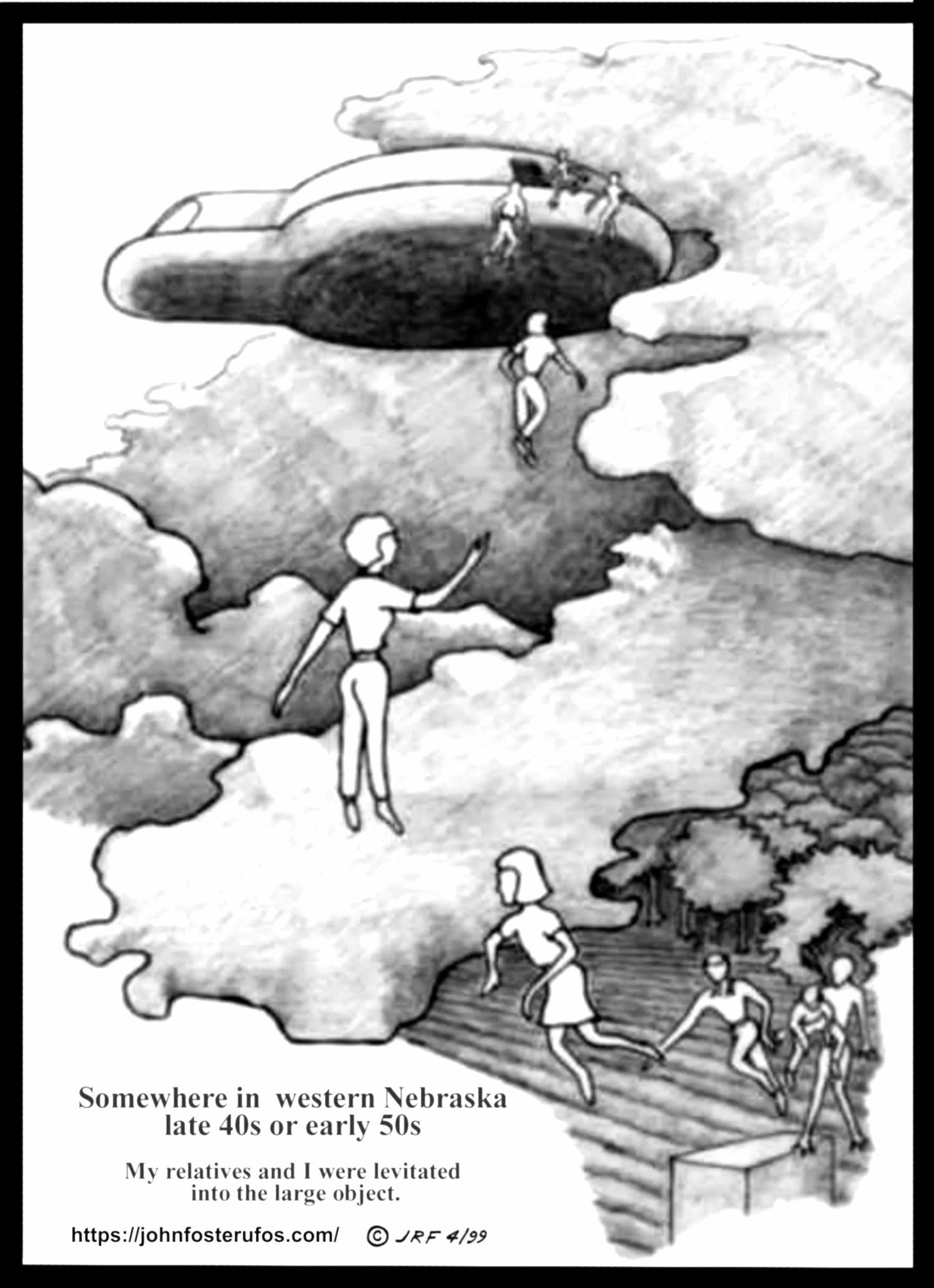
John Foster’s accounts provide a starting point. I’ve interviewed him several times and am familiar with his story and the challenges he has faced with going public. On his website, he describes a flood of recollections from 1986 into early 1987 that left him overwhelmed. In conversation with me, he has said he chose not to pursue hypnosis, preferring to state only what he could consciously remember. Experiences he had struggled to understand became the subject of decades of reflection, writing, and conversation. I have his permission to draw on his material here. [1, 2]
His family’s accounts illustrate how people can remember different aspects of an encounter. John’s daughter recalled the family’s 1975 encounter at Dillon Lake, Colorado. She initially understood a light and a voice above the campsite as a helicopter. Later, she questioned the absence of the expected wind and helicopter noise. She remembered being afraid while watching her father appear calm and engaged in conversation. [2]
“Helicopter” was a familiar word. It gave her something recognizable to call what she remembered. The difficulty came when the details no longer fit.
Other witness material on Foster’s site shows agreement and difference side by side. A witness identified by the pseudonym Bob Collingsworth, recalling an encounter at Chadron State Park, said Foster’s drawing was basically what he remembered, and that he had described it to Foster before seeing the sketch. He had no memory of all the figures in the drawing, explaining that his attention had been fixed on the object in the air. Even where witnesses agree, attention and recollection have their own individual shape. [2]
Some reports go further. Chris Ramsay’s conversation with actor Thomas Jane, discussed below, opens with a listener’s report of soldiers at a firing range who seemed frozen in place yet could still move their eyes. Jane himself says he can’t tell whether his own stillness during his experience was imposed or was simply fear. [6] Other accounts describe people who later recall nothing, or who appear unable to perceive what others are watching. Being unresponsive, having no later memory, and reporting that nothing was visible are different things. Asking exactly what each person noticed provides additional context.
What does it feel like to be the person who remembers? What does it feel like to be told that something happened around you when you have no recollection of it?
Gary Wimmer adds another variation. In his account of February 1977, heightened psychic sensitivity preceded the accident he describes as a near-death, out-of-body experience. He remembers becoming overwhelmed by impressions and apparent foreknowledge, moving between euphoria and fear. After being hit by a car, he felt himself leave his body and expand outward, an experience he describes as being at one with the Creator, visiting the mind of God, and experiencing the Infinite. [3]
The key here is that the disruption was already underway before the dramatic event. Wimmer’s book, A Second in Eternity, follows his effort to understand that period. He says he began the original manuscript in 1997, twenty years afterward. An experience that seemed brief in ordinary time remains a continuing influence on his life. [3]
In my 2017 interview with him, we also discussed the guidance he attributed to beings he called “the Monitors.” His account brings psychic overwhelm, trust, and altered awareness into the same personal history. [4]
These stories encourage me to look beyond the most spectacular moment and consider what came before and after. Did anything foreshadow the event? What difficulties emerged afterward? What helped the person come to terms with the experience?
2. When Silence Gives Way to Conversation
I’ve seen recent interviews with Sir Blake Sinclair and Thomas Jane that bring the decision to speak into focus.
Sinclair’s Roswell and The Intergalactic Mission connects his own reported experiences with his account of his father’s involvement at Roswell. His website describes initial resistance to what he experienced as messages prompting him to write, alongside encouragement from his publicist to share the family story. [5]
That combination interests me. It is a pattern I’ve notice in experiencer accounts: an inward sense that something needs to be expressed, and an outward invitation to express it.
Jane discusses The Watchguard in his September 2026 conversation with Chris Ramsay. Recalling a 2011 experience at home, he describes an indistinct spot that resolved into three connected forms, with colored, threadlike light and changing geometric patterns. He says the experience changed his life and speaks about making it possible to discuss such events while still having unanswered questions. [6]
Philip K. Dick’s 1974 pink-light account belongs beside this discussion. Accounts of that period describe light associated with an extraordinary influx of information. In a later interview, Dick continued to discuss a guiding intelligence and the place these experiences held in his life and writing. [7, 8]
The resemblance is a familiar echo of my nightlight relationship: an unexpected luminous experience, a sense of intelligence or meaning, and years spent trying to understand it. Their descriptions remain distinct. Comparing them allows us to examine a pattern without requiring a single explanation.
These accounts also extend beyond the image of a craft in the sky. They bring the encounter into a home, into perception, and into the person’s understanding of who they are.
Roberta Colasanti, former clinical director of John Mack’s Program for Extraordinary Experience Research (PEER), addressed the difficulty of living with extraordinary experiences in a 1999 presentation at Harvard Divinity School. She described people keeping this part of their lives separate from everything else, sometimes feeling as though they were living two lives. Her examples included a woman who described an unexplained interruption during a drive with a friend as a dream; according to the account, the two never discussed it afterward. [9]
Terry Lovelace carried the encounter he describes in Incident at Devils Den for roughly forty years. After the 1977 camping trip, he says, he and his friend Toby were separated and questioned individually by military investigators. Lovelace lived with nightmares and what he describes as PTSD, and kept the story to himself partly out of concern for his legal career. His later efforts to find Toby again were unsuccessful. (And it would seem that effort was deliberately blocked.) Sharing an extraordinary event had not given them a shared way to live with it. [10]
Even having someone else present does not guarantee a conversation. Colasanti also described varying responses, including fear, awe, connection, grief, and changes in work or purpose. She emphasized that the process did not follow one orderly sequence. [9]
It can take years to learn what an experience means in daily life. A person may feel grateful for one aspect and troubled by another. A new understanding does not automatically make relationships easier.
Experiencer communities can give people somewhere to bring those unfinished questions. Breaking the Silence is one I have watched continue to grow. Its own description brings together NHI contact, near-death experiences, telepathy, out-of-body experiences, and consciousness. It offers public conversations as well as private, unrecorded community meetings. [11]
That creates room for participation beyond telling a story to a public audience. Someone can listen, ask a question, or discover that another person has struggled with similar language. The group continues to evolve. Support is most useful when the differences can remain. No one should have to borrow another person’s interpretation to earn a place in the conversation.
3. The World Changes as We Do
“All at once, without warning of any kind, I found myself wrapped in a flame-colored cloud.”
— Richard Maurice Bucke, quoted in William James’s The Varieties of Religious Experience (1902), lectures XVI–XVII, “Mysticism,” p. 399. link
Bucke describes a sudden luminous experience followed by profound joy and an enduring change in his understanding of existence. His 1872 awakening became the starting point for his exploration of what he called “cosmic consciousness.” He came to regard it as a glimpse of a developing human capacity, finding parallels in the lives and writings of spiritual figures, philosophers, and poets. In Cosmic Consciousness (1901), he proposed that such experiences might signal a further stage in the evolution of human awareness.
Aftereffects of an extraordinary experience can extend into every relationship around the experiencer.
IANDS, the International Association for Near-Death Studies, describes changes reported after NDEs in values, spiritual interests, relationships, and life priorities. Some people also report heightened intuitive or psychic experiences. Its overview emphasizes that individual journeys vary, even where common themes appear. [12]
This opens a larger question. If someone’s relationship with death changes, how might that affect the way they support a dying relative? If their sense of connection deepens, does it change how they treat strangers, animals, or the natural world? If they become more willing to discuss an unusual experience, who else begins to speak?
People reporting mediumship, encounters with the deceased, precognition, or other PSI experiences have observations to contribute. We can ask what they perceived, how they interpreted it, what could be checked, and what changed afterward. The same questions can travel across communities without erasing the character of each account.
Research offers one small window into this process. A 2026 study analyzed 200 TikTok videos about near-death experiences and their comments. The researchers found that the narratives provided spaces for discussing spirituality and meaning, with viewers participating in the conversation. It examined a particular online setting, but it gives us a concrete example of personal testimony becoming a shared discussion. [13]
This is one way to approach “group consciousness”: the evolving ideas, expectations, and possibilities a community can discuss together. Whether a deeper connection through consciousness itself also plays a role remains a further question. The social changes give us somewhere to begin observing.
Why now? Are more people having these experiences? Are more willing to talk? Are people finally finding language for events that occurred decades ago? A story appearing online today may concern an event from 1974, 1977, or 2011. That suggests a shift. We need to distinguish when something happened from when someone felt able to describe it.
AI adds another dimension to this inquiry. Interacting with it can prompt questions about intelligence, understanding, and what we mean by consciousness. Those questions now enter ordinary conversations through a screen on a desk or a phone in a pocket.
AI can also help organize accounts and compare recurring details. Used for this purpose, it needs a clear record of the person’s original words. A polished summary should never become the source from which all later comparisons are made. The unusual description, odd language, or apparent mismatch may be the very thing that signals a pattern.
What I would like to see is a broader conversation that keeps returning to the person: What happened? What changed? What remains difficult? What did you discover when you finally spoke?
We can make room for fear, humor, uncertainty, and wonder. We can listen to the person whose experience brought peace and the person who is still trying to feel at home in the world. We can ask how their lives changed and how those changes reached others.
Extraordinary things are happening, and we are discovering how many people have had their experiences dismissed or have carried them in silence. Stories once kept private are finding listeners. People who thought they were alone are finding one another.
As these experiences change us, those changes reach into our relationships, our work, and the stories we tell. The world changes as we do. Experiences that once set us apart become places where we find common ground.
References and Further Reading
The numbered references identify the accounts and research used here. Personal narratives are attributed to their tellers; the connections drawn between them are the article’s inquiry.
[1] John Foster, Blue River UFO Blog. Firsthand overview, drawings, books, and reflections. https://johnfosterufos.com/
Further reading: Eminent Discovery, Volumes 1 and 2; To Earth From Heaven. https://johnfosterufos.com/books-by-john-foster/
Also: conversations with the author while writing articles for the blog.
[2] John Foster, “Home Page Overview of John’s Story Including Witnesses.” Includes the accounts attributed to Kindra Foster (Dillon Lake, 1975) and Bob Collingsworth (Chadron State Park). https://johnfosterufos.com/home/
Also: Wendy’s Coffeehouse, “Kindra Foster, 11.29.20 – Daughter of UFO/Contactee John Foster.” https://audioboom.com/posts/7737454-kindra-foster-11-29-20-daughter-of-ufo-contactee-john-foster
[3] Gary L. Wimmer, A Second in Eternity. The author’s account of the 1977 experience and the book’s origins. https://www.garywimmer.com/writer/eternity.htm
[4] Wendy’s Coffeehouse, “Gary Wimmer – A Second in Eternity. An Extraordinary NDE,” April 2017. https://audioboom.com/posts/5801785-gary-wimmer-a-second-in-eternity-an-extraordinary-nde
Further reading: Wimmer’s Lithomancy, the Psychic Art of Reading Stones. His site identifies his teacher as Alice Worrall and describes his sixteen-stone method. https://www.garywimmer.com/psychic/
[5] Sir Blake Sinclair, Roswell and The Intergalactic Mission. Author’s account of the book’s background. https://sirblakesinclair.com/
Further listening: Into the Parabnormal, episode 960, “Roswell: In My Father’s Eyes,” September 2026. https://parabnormalradio.com/2026/09/04/ep-960-roswell-in-my-father-s-eyes-w-sir-blake-sinclair
[6] Thomas Jane in conversation with Chris Ramsay, AREA52 / DEBRIEFED, episode 101, September 11, 2026. The Watchguard is Jane’s forthcoming book; Ramsay received an advance copy (around 00:03:46). The detailed personal account begins around 01:35:54. A retail publication date is not established here. https://www.youtube.com/watch?v=DnXPAidAxG8
Searchable machine transcript consulted: https://trackpodcasts.com/episodes/hollywood-actor-shares-wild-alien-encounter-stories-thomas-jane-ep-101
[7] “An Afterword to Philip K. Dick’s Valis,” hosted at PhilipDick.com. Discussion of the 1974 experience and its literary context. https://philipdick.com/literary-criticism/essays/an-afterword-to-philip-k-dicks-valis/
[8] John Boonstra, “Philip K. Dick’s Final Interview,” originally published in The Twilight Zone Magazine, June 1982. https://philipdick.com/literary-criticism/frank-views-archive/philip-k-dicks-final-interview/
Further reading: VALIS, Dick’s fictional treatment of related themes; The Exegesis of Philip K. Dick, selections from his extensive personal explorations.
[9] Roberta L. Colasanti, “Integrating Extraordinary Experiences,” April 1999, John Mack Institute. Excerpted from her presentation at a PEER meeting at Harvard Divinity School. https://johnemackinstitute.org/1999/04/integrating-extraordinary-experiences/
Related essay: John E. Mack, “The Alien Abduction Phenomenon: Trauma or Transformation?” March 1997. https://johnemackinstitute.org/1997/03/the-alien-abduction-phenomenon-trauma-or-transformation/
[10] Terry Lovelace, Incident at Devils Den. Personal account of the encounter and its aftermath. https://www.terrylovelace.com/
Also: video interview with the author, recorded in 2020 during the COVID-19 lockdown. https://www.youtube.com/watch?v=ErCsRQjFo9g Separation and questioning around 31:35–37:50; PTSD and career concerns around 42:48–43:20; efforts to reconnect with Toby around 48:57–51:04.
[11] Breaking the Silence, “Welcome.” Community scope and activities. https://breakingthesilenceproject.com/about-us/
[12] IANDS, “Aftereffects of Near-Death Experiences.” https://iands.org/near-death-experiences/aftereffects-of-near-death-experiences/
Related research overview: IONS, “The Transformation Project,” on changes in worldview, priorities, and relationships across varied transformative experiences. https://noetic.org/research/transformation-project/
[13] Yifan Zhao, Yuxin Fang, Yihuan Chen, and RAY LC, “‘I Was Told to Come Back and Share This’: Social Media-Based Near-Death Experience Disclosures as Expressions of Spiritual Beliefs” (2026). https://arxiv.org/abs/2602.11663
Discover more from Conscious Living & Wendy's Coffeehouse
Subscribe to get the latest posts sent to your email.


