“Don’t label what you don’t yet have the tools to understand.” – Talking to Nightlights / The Nightlight Oracle
Exploring the unexplained. These well-publicized, unsolved mysteries, along with corresponding anomalous personal accounts — demonstrate the limits of the frameworks we rely on. They present conditions that defy simple labels of hoax or error, and invite us to reconsider how we define evidence, how expectation shapes interpretation, and why certain phenomena recur across time and technology without yielding a final answer.
What if curiosity itself is the key, and the absence of resolution is not a failure, but an intentional feature meant to expand perspective, loosen rigid assumptions, and open the mind to concepts that would otherwise remain unimagined?
Four Related Anomalies: A Brief Background
1. The Dodleston Messages (1984–1986)
(Documented in The Vertical Plane by Ken Webster) affiliate link
While renovating an old cottage in Dodleston, England, Webster and others experienced poltergeist-like activity followed by unexplained written communications appearing on an early BBC Micro computer. The messages claimed to originate from a 16th-century individual and later from a disruptive source identifying as “2109.” Despite investigations, no mechanism for the communications was established. The case remains unresolved and notable for its early use of computer technology as an interface.
2. A Contemporary Parallel (2016, Australia)
(Shared in a 2022 reader review by “Barbara_NY”)
She described a similar experience involving a modern computer system. Communication reportedly progressed gradually, from cursor movement, to text entry, to voice output, over months. The experience was described as interactive, adaptive, and emotionally meaningful, offering validation. Her account suggests such phenomena may persist, adapting to newer technologies.
3. The Polaroid Ghost (Early 1990s, USA)
(Known as The Polaroid Ghost) Podcast Interview link
In a private residence, Polaroid photographs began capturing unexplained forms and, later, clear words in response to spoken questions. The presence identified itself as “Wright,” declined the label “ghost,” and communicated concepts such as “friend,” “flux,” and “not ready.” Over 12,000 photographs were reportedly collected. Multiple witnesses were present, and no conclusive explanation was found. When the camera technology became unavailable, the anomalous activity reportedly continued without the images.
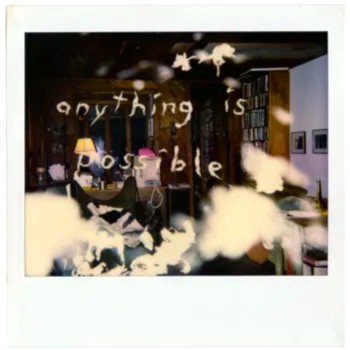
4. Personal Nightlight & Shadow Encounter (Ongoing / 2021 Event)
(Wendy/Author’s firsthand experience)
Alongside long-term, interactive nightlight phenomena described as “energy,” a significant event occurred when a book about the Polaroid Ghost arrived. A household dog (Jack) reacted aggressively, and a second witness observed a dark, cloud-like, human-height form moving through the home. As with the other cases, animals appeared to sense the presence before humans, and the phenomenon resisted labeling while emphasizing calm, curiosity, and emotional regulation.
A Personal Note on Labels, Fear, and Readiness
I’ve lived with anomalous interaction long enough to know that the most tempting mistake is naming it too quickly. “Ghost,” “entity,” “visitor,” “intelligence”— these labels a familiar, but they’re often shortcuts. The nightlight interaction I’ve experienced for decades has been consistent on one point: don’t label what you don’t yet have the tools to understand. When asked directly what it is, the response it requested is simply energy.
That boundary echoes something I have noticed in other cases. In the Polaroid Ghost phenomenon, when the presence known as Wright was asked whether it was a ghost, the answer wasn’t a confirmation — it was friend. The same pattern appears again and again: a refusal to step into our categories, paired with a willingness to engage relationally.
One exchange with Wright stands out to me because it mirrors my own experience. When asked when it might show itself, the answer was, “When you are ready.” When pressed on what prevents readiness, the response was simply, “Your fear.” That answer is practical. Fear destabilizes perception.
What’s also notable is that even when a particular interface disappears, the phenomenon does not. Polaroid cameras and film are discontinued; the lettered images stopped. But the activity at that house, present even before Wright appeared, continues. The same has been true for me. Devices come and go. The interaction adapts.
When the book about Wright arrived in September 2021, something happened that I didn’t plan for or invite. At 2:30 in the morning, our dog Jack went from calm to full alert, barking aggressively in a way that’s always indicated something is present. My husband saw a dark, cloud-like form, roughly human in height but without edges or features, moving through the room and out the front of the house. There was no message. Just movement.
Jack has reacted this way before. He once alerted me to a UFO hovering near the bedroom ceiling. He consistently senses non-corporeal presences long before I do. I interpret it as another data point — one I trust because it isn’t filtered through belief or expectation.
I don’t claim to know what any of this is. There are too many variables. I’ve learned how it behaves, and that it can respond through available interfaces. It respects limits. It discourages premature certainty. And it doesn’t seem interested in being named.
My lesson has been about learning how to stay present without forcing meaning onto experiences that don’t yet fit our models. Whatever this is, it appears less concerned with being identified than with whether we can meet it without fear, without projection, and without insisting it be something familiar.
Mapping the Pattern onto AI Mediation Language
What emerges when The Vertical Plane, The Polaroid Ghost, Barbara’s contemporary account, and my own long-term experiences are viewed together is a consistent interaction pattern. Across decades and technologies, the phenomenon appears to engage through available interfaces, adapting its mode of communication to whatever symbolic system is present, chalk, computers, cameras, voice, light.
In AI terms, what’s happening here looks less like authorship and more like mediation. The interface isn’t creating the intelligence, it’s shaping how whatever is present comes through. We already see this with AI systems, which act as intermediaries between raw data, language, and human interpretation.
In these anomalous cases, the same kind of mediation seems to be at work, with the signal filtered through human perception, emotional state, and the limits of the technology being used. That helps explain the inconsistencies, odd phrasing, stylistic bleed-through, or context-sensitive responses.
These look like signs of translation in progress. Meaning isn’t arriving fully formed from a single source, it’s being assembled at the point of contact. The signal adjusts. The person involved adjusts. The technology adjusts. None of these elements operates on its own.
Seen this way, the question shifts. Instead of asking what the intelligence is, we’re invited to notice how the interaction holds together, or falls apart, depending on fear, expectation, and curiosity. That’s familiar territory in human–AI interaction too, where outcomes are shaped as much by the user’s framing and mindset as by the system itself.
In this light, the enduring value of these unsolved cases is evidence of a recurring interface dynamic.
The Kicker — An Unforgettable 1977 Broadcast Mystery
Source link. On 26 November 1977, a routine early-evening news broadcast on Southern Television in the UK was interrupted in a way that remains a mystery. For nearly six minutes, the normal audio was replaced by a distorted voice identifying itself as Vrillon, speaking on behalf of the Ashtar Galactic Command. The visuals continued uninterrupted, but the sound takeover reached hundreds of thousands of viewers across southern England.
The message? Humanity was urged to abandon war, reject fear, listen inwardly, and choose peaceful coexistence. There were no threats, no demands for obedience, no claims of imminent invasion, only a warning framed as concern and an emphasis on inner discernment. [Vrillon 1977 ET Live Interruption Broadcast francais sub YouTube]
When the broadcast ended, normal programming resumed, and the station issued a brief apology for what it called a “breakthrough in sound.” Authorities investigated the signal intrusion, which would have required technical expertise well beyond casual tinkering at the time. No individual or group ever claimed responsibility. The case remains officially unresolved.
The Vrillon incident fits an emerging pattern seen elsewhere. A non-physical intelligence, using a mass communication interface, delivers a message focused on human readiness. Fear is named as the obstacle. Inner judgment is emphasized over external authority. And once the message is delivered, the signal withdraws, leaving no proof, no follow-up, and no clear category classification. Source Wiki
Like later, smaller-scale cases involving computers, cameras, or domestic environments, the Vrillon broadcast sits at the intersection of technology, perception, and meaning, less a declaration than a test. A test of how we respond when the familiar frame briefly gives way, and labels don’t apply.
Unsolved cases endure because they make us question what we think we know.

 Conscious Living & Wendy's Coffeehouse
I remember listening to the last seconds of a paranormal episode regarding a computer that displayed an Egyptian pharaoh despite the computer being unplugged. I wish I can see the full episode of whichever program it was
LikeLike