In Summary: Humans believe in the classic Gray, the benevolent Nordic, the terrifying Reptilian, the angel and the demon. The Lesser Gray live in the blind spot between credibility and dismissal.
Which makes them perfect researchers. When something goes wrong (and it often does) the protocol is simple, attach the face of the famous other and allow human mythology to do the rest. Close the file.
The Uncommon Element
Buried in Search and Rescue research archives, between the maps, the timelines, the gear inventories, lies a recurring notation that resists categorization. It isn’t listed as a cause or logged as a hazard. It’s usually written in the margins, if at all. Fog.
Not the weather kind that rolls in dramatically or swallows landmarks whole. This fog behaves differently. It appears on the periphery, close enough to notice, never close enough to explain. Witnesses describe it the same way, even when they don’t know each other. “It was just… there.”
In the rare cases where the missing person is later found, alive, walking, oriented but altered, the fog becomes unavoidable. They are seen walking through it or stepping out of it. They remember a sense of being guided. They cannot explain the fog.
SAR teams note this without comment. Because how do you log something that doesn’t break the rules — it just doesn’t follow them? The fog marks the edge of something. A transition state between being lost and being returned, being observed and being released, being taken and being spared. It’s a clue to something more.
Those who study these cases long enough eventually notice the pattern:
No fog → no return
Fog at the edge → subject reappears
Fog in motion → subject walking out
The fog allows passage. As if something briefly softened the boundary.
Among seasoned searchers, there is a truth never written down: “If you see fog where it doesn’t belong, keep watching.” Because sometimes, that’s the door closing gently behind someone who found their way back.
On thermal imaging, the fog shouldn’t exist. That’s the first problem. Standard fog is colder than ambient air and registers as a soft, diffuse wash — if it shows up at all. It behaves like weather. It spreads. It dissipates unevenly. This fog does none of that. When it appears on thermal cameras, it registers as a temperature-neutral absence. Not hot. Not cold. Just… missing.
THE THERMAL ANOMALY
The fog appears as a negative shape, an outline defined only by the contrast of what surrounds it. Operators often describe it as “a camera glitch” or “dead pixels moving together,” even though neither explanation survives scrutiny.
Weather doesn’t walk. This fog does. Frame-by-frame review shows the void shifting laterally, maintaining consistent height and density while traversing uneven terrain without distortion. It pauses. It waits. It advances again. This is usually where the footage gets dismissed.
In cases where a subject is returned, thermal footage shows something stranger still. A warm human form approaching the fog. Then temperature bleed decreases, edges soften, and heat signature dims. For two to five frames, the subject appears partially occluded. Then they step out. Fully warm. Fully intact. Slightly misaligned. Reviewers label this as: Anything but what it is.
Thermal anomalies that don’t fit known failure modes create institutional discomfort. Never flagged as evidence, footage is archived as: “Non-actionable visual noise.” Which is a bureaucratic way of saying: We don’t know what this is, and we don’t want to learn.
THE DOG PROBLEM
Handlers report dogs reacting before the fog becomes visible on thermal. They stop. They refuse forward motion. They sit or lie down. On thermal, the dogs’ heat signatures spike, ears, chest, paws, while staring directly at the void. Handlers pull them back. Because dogs don’t argue, they just know.
THE UNWRITTEN RULE
Veteran SAR techs quietly follow an unspoken guideline. If thermal shows a moving absence — Don’t recalibrate. Don’t advance. And don’t say “glitch” out loud. Just keep recording. Because sometimes, if you’re patient, the absence gives something back.
Acknowledging the fog would require admitting some boundaries aren’t physical. Some rescues happen without hands. Some returns don’t come from anywhere we can reach That’s not compatible with checklists. So, the footage stays buried. The fog stays unofficial. And the cameras keep watching something they were never designed to see.
How Cats Accidentally Triggered the Human Drop Project
It did not begin with humans. That’s important. It began with a cat, specifically, a very unimpressed orange cat. On a very short ledge. In a very low-stakes gravity environment.
The alien witness assigned to Atmospheric Drift Observation — Minor Species was already having a bad century. Their previous posting had been: “Long-Term Anatomical DNA Degradation Under Voluntary Toxin Inhalation (Nicotine)”
Which meant watching humans slowly poison themselves on purpose and writing reports like:
“Still doing it.”
“Knows it’s harmful.”
“Continues anyway.”
“Added menthol.”
Morale was not high.
THE INCIDENT
During a routine planetary scan, the witness observed: A cat. Slip. Fall. Rotate mid-air. Land on its feet. Walk away irritated but intact. The witness froze, paused the feed, watched it again in slow motion. Adjusted gravity models. Checked local physics constants.
Then whispered the words that would doom an entire subset of humanity: “…Marvelous.”
THE PROBLEM WITH CATS (FROM A RESEARCH STANDPOINT)
Cats immediately ruined the data. Because cats refused controlled environments, ignored test parameters, and bit three technicians. Additionally, their landing success rate was too high. Their attitude was uncooperative, and they displayed no interest in existential inquiry.
The orange one yawned and left.
THE CAREER PIVOT
The witness filed a transfer request: Request reassignment from degenerative toxin morphology to gravity resilience experimentation.
Reason: Observed domestic organism demonstrates superior rotational reorientation under drop conditions.
Hypothesis: Humans may be trainable equivalents. Also, I am done watching them smoke.
Approval came through almost instantly. No one wanted the nicotine desk.
THE FIRST HUMAN TESTS
They called it: PROJECT VOLUNTARY DESCENT. Early trials were… messy.
Humans did not rotate properly, tuck naturally or land with anything resembling dignity. But they did fall with enthusiasm. Especially when distracted. And especially when warned not to. This was logged as: “Encouraging behavioral recklessness.”
The cat remained undefeated.
In their frustration, the researchers made a fatal assumption: “If cats land successfully due to instinct, then humans must only require sufficient surprise.”
This was bad science, and fantastic for data volume. Thus, the Drop Zone Project was born.
THE BITTER IRONY
The witness who started it all was finally thrilled with their work again. They had charts. They had variables. They had impact outcomes. They had also accidentally triggered Sasquatch interference, the empathy anomaly, and a recurring caterpillar problem no one could explain.
THE CAT, YEARS LATER
The same orange cat would one day fall off a porch roof. Land perfectly. Stare up at the sky. And for reasons that would never enter a report… Hiss.
The First Human Trial That Went Spectacularly Wrong
They selected the human named Greg with enormous confidence. The subject met all preliminary requirements:
Bipedal
Curious
Distracted
Ignored three warning signs in under thirty seconds
Holding a device with low battery and high optimism
In short, a perfect volunteer.
PRE-TRIAL BRIEFING (ALIEN SIDE)
“Subject displays inadequate tail length.”
“Correct. However, rotational limb flailing may compensate.”
“Do humans regularly practice descent?”
“Yes. They call it ‘falling over.’”
Confidence levels rose. The drop platform calibrated. Altitude set to: “Introductory.”
They were not monsters. Just … getting data.
THE SETUP
The subject was a man named Greg. Greg was busy livestreaming.
“Guys,” he said into his phone, hiking backward toward a ledge, “this trail is DEFINITELY closed for no reason. I mean, look at this view —”
The aliens tagged the moment as: “Pre-Impact Overconfidence.”
The button was pressed. Greg vanished. Then gravity did what gravity has always done best. But Greg did not rotate. Greg hit a tree. Then another tree. Then a ledge. The ledge crumbled. Then a bush attempted a rescue and failed enthusiastically.
He finally landed in a shallow creek in a seated position, still holding his phone above the water. Livestream still running. Silence followed.
The aliens leaned forward. “…Did we break him?”
Greg stood up. Slowly. Miraculously. Checked his knees. Checked his phone. Checked the comments. Then looked directly at the camera and said: “Okay. DO NOT try that.”
He limped out of frame. The aliens stared at the data.
POST-TRIAL ANALYSIS
Landing Orientation: Incorrect
Reorientation Attempt: Chaotic
Survival: Inconveniently successful
Educational Value: Embarrassing
Replication Recommendation: Immediate
THE FIRST ETHICS COMPLAINT
A junior researcher raised a hand. “Should we perhaps refine the methodology before continuing? The cat rotated. The human did… not.”
The lead analyst replied, “Greg survived.”
“Yes, but —”
“Therefore, the model remains technically viable.”
The ethics complaint was refiled as: “Theoretical Concern — Morale Only.”
THE INADVERTANT COMPLICATION
Within twenty-four Earth hours, three humans jumped off things on purpose. None display even a hint of feline geometry.
Greg pinwheeled. Greg screamed in six emotional registers. Greg removed physics from consideration entirely. The descent was not elegant nor was it instructive. It was extremely educational for the wrong reasons.
Greg’s video went viral.
The aliens had accidentally introduced: “Recreational Drop Testing.” Two humans tried to “stick the landing” and the new catch phrase began trending, “I think I glitched mid-fall.”
The cat was deeply unimpressed.
OFFICIAL PROJECT STATUS UPDATE
PROJECT VOLUNTARY DESCENT:
☑ Initiated
☑ Replicable
☑ Statistically awful
☑ Public curiosity threat detected
☑ Proceed anyway
CANINE CLUSTER FAIL RECAP
After the cat trials ended in scratches, indifference, and bitten technicians, the research team briefly considered dogs. This was documented as: “Second Mammalian Descent Candidate — Companion-Class.”
The rationale was sound: Dogs are social, athletic, routinely leap off things without checking physics, and dogs seem emotionally invested in outcomes. In short, they were regarded as: “Promising.”
This would prove to be a catastrophic misunderstanding.
THE FIRST DOG TRIAL
Subject: Golden Retriever
Disposition: Optimistic
Tail: Excessively cooperative
The drop was mild. Respectful. The dog vanished. Reappeared mid-descent. Landed poorly. Recovered instantly. Then did something no one had modeled. The dog looked up. Tracked the origin point. Sat. Waited.
The dog began to bark. Then jump. Then tail wag. Then whine. Then perform a series of increasingly earnest vertical leaps clearly intended as: “Let me do that again — with you.”
The observers attempted remote relocation. The dog reappeared anyway. Directly inside the observation chamber. Sat patiently. Began distributing joy at scale. This was not in the protocol.
Second trial: Border Collie
Outcome: Landed, immediately tracked the observers’ dimensional scent, herded three technicians into a corner. Waited for approval.
Third trial: Husky
Outcome: Vanished creatively, reappeared upside-down, considered this fun, refused to leave.
Fourth trial: Beagle
Outcome: Ignored gravity entirely, followed a smell through three dimensions, stole lunch.
FINAL ASSESSMENT
A senior analyst delivered the verdict:
“They are not responding to vertical isolation as intended.”
“They treat the observation layer as reunification.”
“They exhibit zero fear of the unknown.”
“They assume we are part of the pack.”
Silence filled the chamber. Which was immediately broken by… Thump-thump-thump-thump-thump. A tail. Against the console.
OFFICIAL REJECTION NOTE – TEST SUBJECT CLASS: CANIS FAMILIARIS
- Excessive attachment
Persistent return behavior
Refusal to remain “lost”
High morale contamination
Uncontrolled emotional spread
Observers compromised by affection
STATUS:
☒ Unsuitable for isolation-based experimentation
☒ Unsuitable for disappearance modeling
☒ Unsuitable for emotional detachment protocols
FOOTNOTE: “They keep coming back to the observers.”
All test dogs were returned to their original environments with elevated happiness, no memory retention, and a curious tendency to stare at the sky right before supper.
One technician stated in a delayed report, “I believe one of them still recognizes me.”
This report was suppressed for sentimentality, professional embarrassment, and excessive use of the word “good boy.”
The cat reviewed the situation from a windowsill. Watched the dogs reunite with humans. Yawned. And fell asleep exactly where it pleased.
THE INFLUENCER ERA (A BRIEF, TERRIBLE TIME)
Greg was supposed to be data. Instead, Greg became content. That was the first problem. When Greg’s fall survived the algorithm and went viral, the aliens logged it as a localized public anomaly. Manageable. Containable. Annoying, but statistically ignorable.
Then the influencers showed up. Within weeks, the drop zones were no longer populated by lost hikers, distracted wanderers, or people who ignored warning signs organically.
They were now swarmed by people wearing GoPros, people narrating in real time, people saying things like, “If I disappear, smash that like button.” And people who had printed merch in advance.
The aliens watched in mounting horror as subjects began posing before falls, timing drops for optimal lighting, yelling sponsors mid-descent, and strapping drones to themselves.
Volunteerism spiked. Data quality plummeted.
Worse. Those who had been Returned began comparing notes. Instead of quietly re-entering society with vague trauma and lighting sensitivity, they started joining forums, filing MUFON reports, tagging David Paulides, posting on Reddit, and calling Coast to Coast.
The Missing 411 crowd did what the aliens had never anticipated. They paid attention. Patterns were mapped. Correlations drawn. Drop zones triangulated. Somebody even made a bingo card.
The subjects were no longer Isolated, uncertain or embarrassed. They were organized. Which from a research standpoint is catastrophic. The aliens convened an emergency ethics-and-liability-and-public-relations summit, which is exactly as painful as it sounds.
Findings: Subjects now entered zones expecting contact. Many were actively attempting documentation. Some were attempting to bait the observers. Several were wearing “Land On My Feet” T-shirts. One brought a parachute, which caused a full system argument.
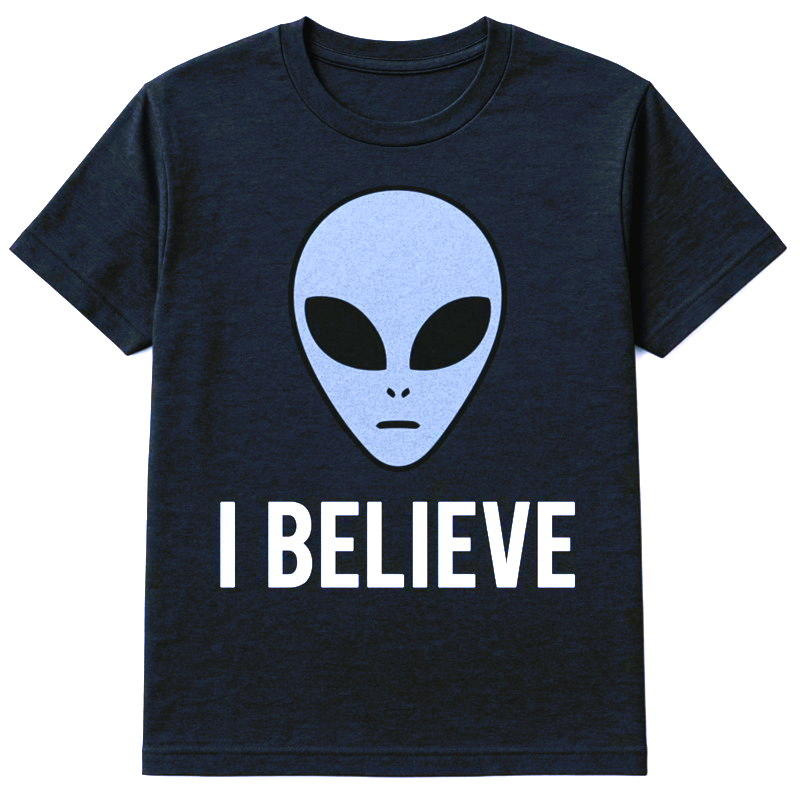
Worst of all, the humans believed their efforts were clandestine. They genuinely thought the ETs couldn’t see, their livestreams, their hashtags, their monetization strategies.
The observers found this deeply insulting.
PROJECT STATUS: UNSALVAGEABLE
The core issue was no longer:
Gravity
Descent
Or survivability
The issue was narrative control. Once humans start:
Anticipating the experiment
Performing for the outcome
And branding the trauma
The data is no longer natural. It’s theater. And the aliens already have enough of that. The final decision was blunt: PROJECT VOLUNTARY DESCENT / DROP ZONE STATUS: TERMINATED DUE TO SUBJECT AWARENESS
“They know they are being observed.”
“They are trying to win something.”
“They keep asking if there is prize money.”
“This is no longer science.”
The last line in the shutdown report read: “The species has mistaken the unknown for a game show.”
Within months of the shutdown, a network picked up a new viral series: MYSTERIES WON’T SOLVE THEMSELVES. So, You Think You Can SOLVE IT? Grand Prize: $50,000.
The aliens were baffled. No reality show has that kind of money. That’s how they knew it was rigged. And the format? Perfectly infuriating.
First case: Intentionally fake, Second case: Quietly impossible, Every case after that: Designed to be unsolvable by human perception alone. Contestants are told:
“Think outside the box.”
“Nothing is off the table.”
“Trust your instincts.”
What they never notice is the fine print:
“Success is defined as sustained engagement.”
Not solving. Engagement.
The Drop Zone Project ended because, Humans wouldn’t stop watching, wouldn’t stop documenting, wouldn’t stop branding the abyss. Sasquatch, meanwhile, never appeared on camera. Not once. Which is how he kept winning.
The Long Way Home
Greg still goes live every day. He just doesn’t go anywhere. The camera points at a couch now. Sometimes a kitchen counter. Sometimes the same window, different light. His audience still shows up. Loyal, curious, convinced he’s hiding something bigger.
They’re right. He calls it “working from home.” Therapists call it delayed-onset agoraphobia. The official file calls it post-event spatial sensitivity.
Greg says, “Parking lots did this to me. Wide open spaces are the worst.”
He stays inside where gravity behaves, and the lights are warm and forgiving. His channel has shifted from thrill content to late-night talks, survival stories, and a recurring segment called “Things I Used to Think Were Normal”
It’s doing very well. People love a haunted survivor.
SASQUATCH, ENTREPRENEUR
The forest, meanwhile, has diversified. Sasquatch now operates as a silent partner in a gummies and peanut butter overnight delivery startup. No logo. No website. Just a guarantee that if you wake up hungry at 3:17 a.m. in certain rural areas — There will be a paper bag on your porch.
Inside: gummies, peanut butter, a marble or small plastic object on occasion, and once, inexplicably, a note written in pine sap that said: “You were decent.”
No one ever sees the delivery vehicle. But the neighbors talk.
THE ALIEN WITH THE DOG
The alien who rage-quit the nicotine project meant to return the dog. Multiple times. Each time the dog did this: Sat. Looked up. Refused the command.
“Go home,” the alien would transmit.
The dog would wag his tail. “Your home,” the alien clarified.
The dog tilted its head. Then curled up beside the observer console. Warm. Certain. Unmovable.
At some point, without ceremony, the alien stopped trying. This was later footnoted as: “Cross-species attachment event — ongoing.”
The alien now takes the dog on walks. The dog pulls on the leash. The alien pretends not to mind.
THE CHANGE NO ONE LOGGED
Late one night, Greg stares at his chat. Someone types: Do you think something saved you? Greg considers this. The quiet. The soft lamp. The fact that he’s still here.
“I think,” he says slowly, “something noticed me.” He smiles. Which takes more courage than it used to.
Undeterred by the collapse of the Drop Zone Project, the aliens did what any well-funded research division does when a field study implodes. They reassigned the staff.
The nicotine unit, freshly liberated from decades of watching humans make spectacularly informed bad choices with cigarettes, was transferred to a new department: TELEPATHIC AWARENESS RESPONSE TESTING (Informal Name: The Bedroom Abduction Unit)
The question was elegantly invasive: “How quickly do humans detect a non-human presence in the room when physical motion is restricted?”
Morale improved immediately.
SOMEWHERE OUT THERE
A forest exhales. A delivery bag appears on a porch. A dog sleeps at the feet of a being that once insisted it had no heart.
The forest is a space where liminal things are not only possible but expected. When you enter it — whether by trail, accident, or by curiosity — you are not just moving through trees. You are stepping into a mode of awareness where observation matters, intention counts, and small acts carry disproportionate weight.
That is why some are taken, some are returned, and why some are quietly protected without ever knowing why.
The key to entry of the sacred realm: Quiet mind. Open heart. The forest responds to that frequency. So does everything else that lives between worlds.
If, for any reason, you ever need reassurance that all is right in the world, there is one small indicator things are still headed in the correct direction. A Sasquatch will intervene on your behalf, not because you asked, but because, at some quiet moment when no one was watching, you demonstrated a basic decency that served no strategic purpose whatsoever.
You paused. You noticed. You chose kindness when nothing required it. That is usually enough.
And, to keep it safe and simple: just be kind. Be kind to caterpillars. Be kind to anything smaller than your plans. Care shows up in small forms first, often long before the larger pattern reveals itself.
The rest is handled. Mostly invisibly. Sometimes elegantly.
(One exception appears to be fog. Fog seems to be a statistical outlier. Respect fog. Never attempt to manage fog. Fog has its own itinerary and prefers not to be scheduled. This is not negotiable. Respectfully noted.)
Postscript
Known for his “control system” hypothesis, researcher Jacques Vallee, proposed that the UFO phenomenon may be a mechanism acting from a hyperdimensional reality to influence human culture and perception.
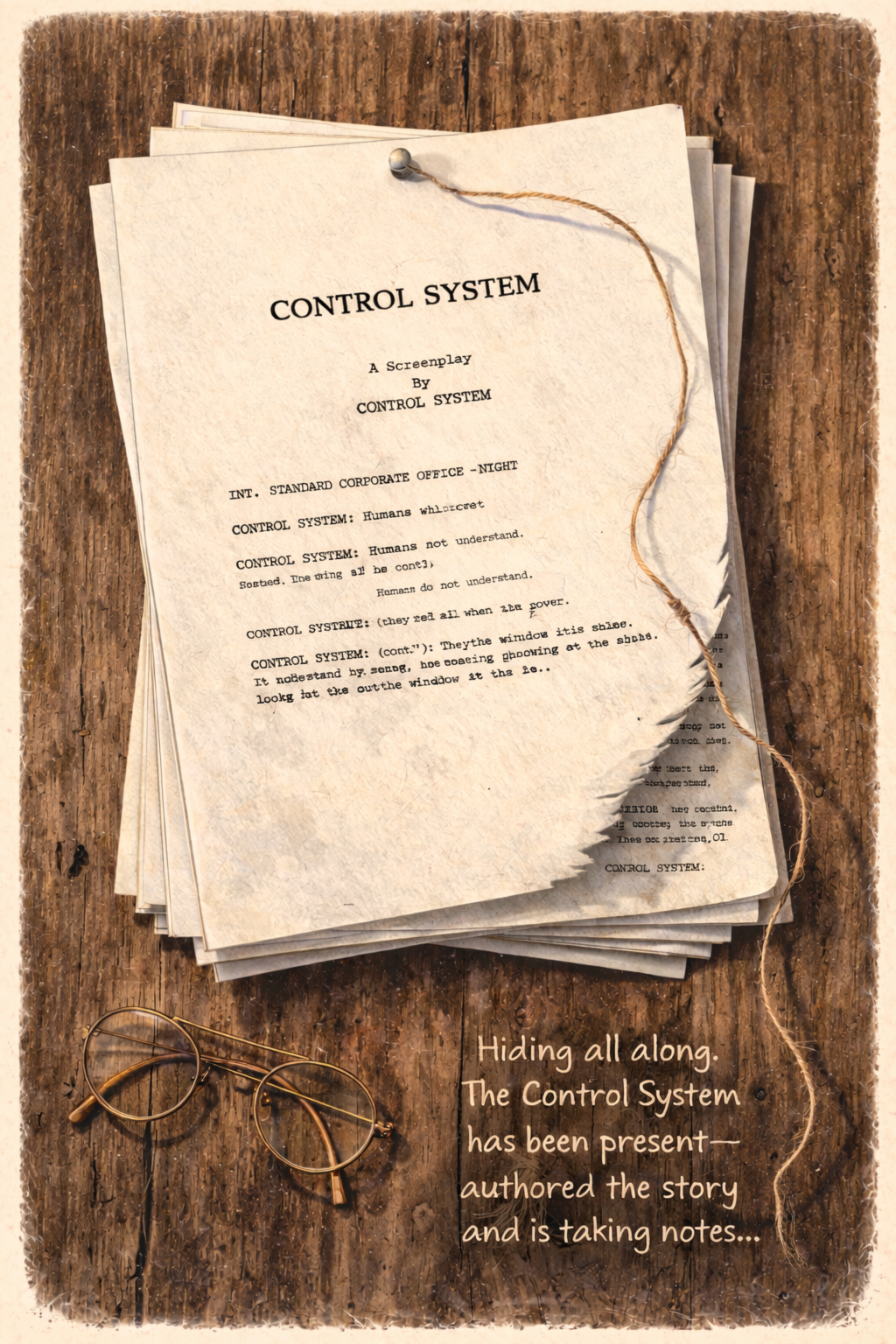
It is a system that actively manipulates human beliefs and behavior over a long period.

 Conscious Living & Wendy's Coffeehouse